The answer depends on your project’s requirements, environmental and climate conditions, affordability, and durability. Understanding the main differences between steel fabrication and aluminum fabrication will help you make a more informed decision and lead you to make a better choice.
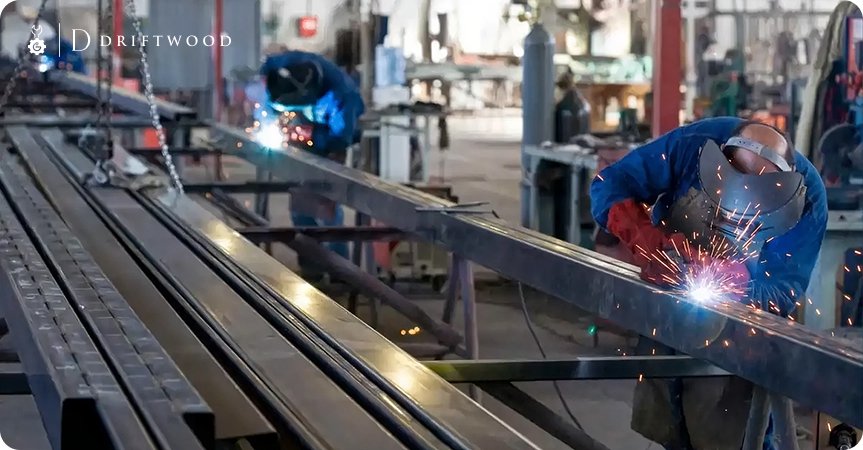
Most people are not aware of what is the real purpose of steel fabrication is. It is actually a process of bending, welding, forming, and putting steel together to make a customized structure or building. Steel is mainly known for its high durability, high strength, and ability to adapt to demanding conditions, different climates, and environments. Steel fabrication is mainly used in factories, industrial companies, warehouses, construction companies, structural frameworks, heavy machinery environments, and other industrial places, including staircases, etc. Its strength actually provides particular value where the material needs to handle heavy loads and significant mechanical strength. Depending on the project and based on different works and types, the behavior of the steel can be chosen to achieve a particular combination of strength, durability, and affordability in every aspect..
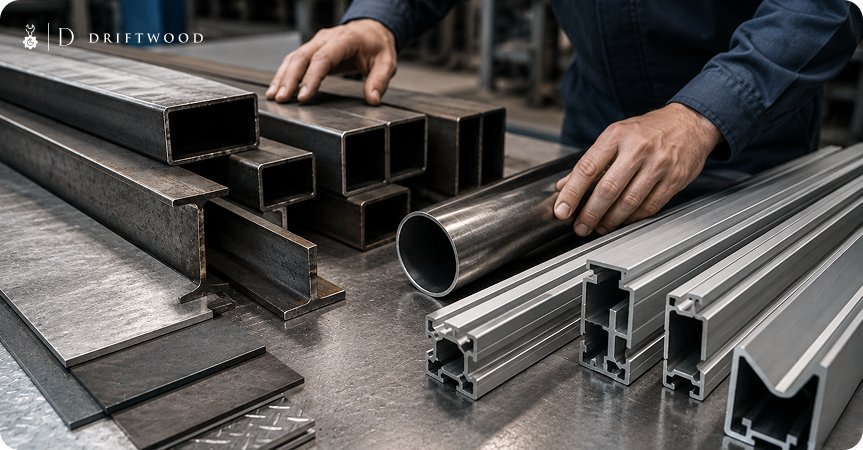
People can get confused between these two, steel fabrication vs aluminum fabrication. Then, what is aluminum fabrication actually? It involves the same processes as steel fabrication, like bending, welding, machining, and choosing the right aluminum to build lightweight and customized components. Aluminum is mainly considered lighter than steel, while steel provides better strength and lifespan for many projects. It is also used for architectural buildings, transportation facilities and equipment, enclosures, lightweight frames, panels, and other applications where lowering overall weight is important. One of the main advantages of aluminum fabrication is its natural resistance to corrosion. This makes it a unique option when compared to steel fabrication. This option will be exposed to moisture, humidity, and other weather conditions and outdoor changes.
The best material actually depends on the purpose or goal of the project. Here are some of the main differences and factors to consider between them.
Steel mainly offers better strength and durability than aluminum fabrication. This makes it a more preferable option for heavy, high-weight machinery and building applications and project works where the biggest or heaviest load-bearing capacity is the major requirement. Aluminum provides a better strength-to-weight ratio, but it will not be the best choice or option for higher or extremely heavy loads or purposes involving different structural conditions.
One of aluminum’s main advantages or benefits is its very lightweight feature. Aluminum components can be much easier to handle, transport, and install when compared to steel fabrication. Steel is heavier, which increases transportation and handling requirements. However, that additional weight can also provide better stability and durability in certain projects.
Aluminum naturally has a kind of protective oxide layer on its surface, which helps resist corrosion. As a result, it performs well in external, humid, and moist weather conditions. Steel can also resist corrosion in extreme weather conditions through galvanizing, powder coating, painting, and other treatments. However, untreated steel can lead to corrosion, particularly when exposed to air and moisture.
Steel is highly durable, and it can withstand heavy mechanical applications, impact, and demanding warehouse or other heavy-work environments. For heavy-duty purposes, properly selected and fabricated steel can provide good long-lasting performance. Aluminum is also very durable, but it is generally more susceptible to deformation under very heavy impact when compared with steel.
Affordability or cost is a very crucial factor when comparing steel fabrication VS aluminum fabrication. Material affordability is one of the main factors that particularly affects the overall project cost. Fabrication complexity, finishing, tensile strength, transportation, execution, and maintenance should also be considered. Steel can often provide an affordable solution for very large structural and heavy-duty projects because of its high strength and availability.
However, its heavier weight and potential need for corrosion protection can increase transportation and maintenance costs. Aluminum may have a higher material price in some projects, but its lightweight nature can reduce transportation and handling requirements. Its corrosion resistance can also reduce maintenance requirements over the long term. Because of this, selecting the most affordable material does not always mean choosing the best solution, but a good approach can make a big difference in its price, value, and ownership throughout its whole lifespan.
If your project is mainly considering better strength, then steel is usually the best choice. It’s particularly suitable for very large structural beams, heavy working environments, different industrial places, heavy machinery work environments, and other projects that need to withstand substantial loads. Aluminum is a very good option for applications ranging from moderate to strong, where its lightweight nature makes it suitable for places where both strength and low weight are required. Its strength-to-weight ratio makes it useful in transportation, architectural, and lightweight structural applications. The specific hardening, design, fabrication method, and engineering requirements will also affect the final result of these two materials.
In between steel fabrication and aluminum fabrication, the main difference is the weight. The weight of each material can have a particular influence on different projects. Steel is heavier when compared with aluminum fabrication. Its transportation and execution will be more demanding when it comes to a large fabricated structure.
Aluminum’s lightweight nature will make it very easy to handle and execute. This can potentially lower the labor requirements, and it will make it a more practical option for different projects and different works where transportation and ease of work are very important. For different projects involving transportation work or installation from different locations, aluminum is the best option for this kind of purpose.
For its lifespan, maintenance is one of the most important things to consider. Steel will require a protective surface layer or treatment to prevent corrosion, particularly in external environment projects or very wet or humid weather conditions.
Regular inspection and maintenance will help to extend the service life and increase the lifespan of the project or building. Aluminum mainly needs very little corrosion protection because of its natural oxide layer.
This makes it an attractive option for external applications, coastal weather conditions, and other works where minimizing maintenance is a priority. However, aluminum is not completely immune to corrosion and is not entirely resistant to corrosion. Certain environmental conditions and direct contact with external factors or other materials can cause corrosion. So, proper material selection is a main consideration for this purpose.
If you are looking for a better-value material, there is no one single answer. Different aluminum fabrication and steel fabrication have different purposes. So, when it comes to value, steel fabrication vs aluminum fabrication should be evaluated according to the specific needs and goals of the work or project.
So, these are the main points. In other words, steel is often a very good option when it comes to strength, while aluminum can be the best option when weight, corrosion resistance, and ease of handling are more important.
Before choosing steel fabrication or aluminum fabrication, mainly consider other factors. Start by understanding the expected load-bearing capacity and the kind of projects you are going to do. Then, evaluate the external factors and the weather conditions where the fabricated component will be used. You should also consider the project’s cost, expected longevity, transportation needs, execution process, and maintenance cost. Working with very experienced fabrication professionals and a company will make this decision much smoother.
A professional fabricator can guide and assist you with better options and make your project more compatible. The specific recommendation will provide you with its thickness, fabrication technique, and finishing method.
Choosing steel fabrication VS aluminum fabrication mainly depends on the company or project you have undertaken. Choosing an expert and experienced, reputed company will help make your project much easier. It’s actually based on performance, cost, long-term durability, and more. Steel is the best option for heavy-duty buildings that need better strength, rigidity, and load-bearing capacity. Aluminum, on the other hand, offers good value, and its lightweight nature helps create different aesthetic and very flexible structures, along with corrosion resistance and ease of handling.
Rather than focusing only on the beginning stage, such as material cost, look at the whole picture, including transportation, execution, maintenance, durability, and working conditions in different weather conditions. This will make a big difference. Understanding the difference between steel fabrication and aluminum fabrication will help you choose the right option for your project.