Although both systems are designed to maximize warehouse space, they serve different purposes. This guide explains their features, advantages, and how to choose the ideal option for your business.
A warehouse is only as efficient as its storage system. The right rack not only increases storage capacity but also improves accessibility, safety, and workflow. Understanding the difference between pallet racks and cantilever racks helps businesses select a solution that matches the size, weight, and type of products they handle every day.
Investing in the wrong system can lead to wasted space, slower operations, and higher handling costs.
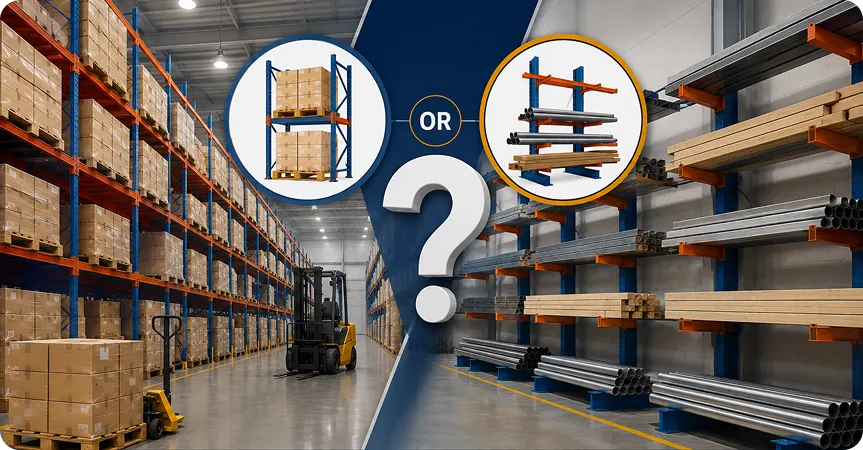
When comparing pallet racks vs cantilever racks, pallet racks are the preferred choice for warehouses storing boxed products, packaged goods, cartons, and standardized inventory. Their structured design allows businesses to maximize vertical storage while keeping products organized and easily accessible.
Unlike pallet racks, cantilever racks are built to store long, oversized, or irregularly shaped materials. Instead of front columns, they feature horizontal arms extending from vertical supports, making loading and unloading much easier.
When discussing pallet racking vs cantilever racking, cantilever systems are the clear choice for businesses handling timber, steel bars, pipes, furniture panels, aluminum profiles, and construction materials.
Their open-front design provides unrestricted access, reducing product damage during handling.
When comparing pallet racks vs cantilever racks, the biggest difference lies in the type of inventory they are designed to store.
While deciding or Cantilever Rack, let’s know about it in common, Pallet racks work best for products stored on pallets with uniform dimensions. They are commonly found in warehouses where forklifts move inventory throughout the day.
Cantilever racks, however, are specifically engineered for products that cannot be stacked on pallets due to their length or irregular shape. Businesses dealing with construction materials or industrial supplies often benefit more from this storage solution.
Choosing between the two depends entirely on your inventory requirements rather than price alone.
The difference between pallet racks and cantilever racks extends beyond their appearance. Their functionality, accessibility, and storage capabilities vary significantly.
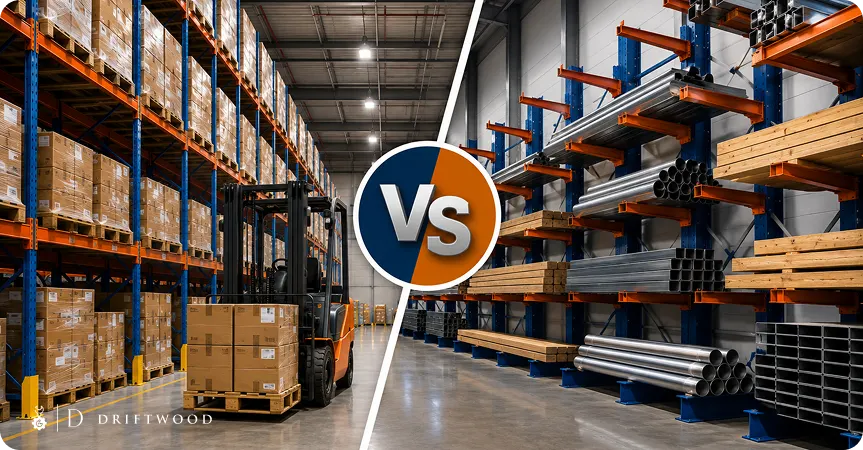
Pallet racks include vertical frames at the front, making them perfect for boxed or palletized goods. Cantilever racks eliminate these front posts, allowing long materials to extend beyond the rack without obstruction.
If your inventory consists mainly of standard packaged products, pallet racks offer excellent organization. If you regularly handle long materials, cantilever racks provide greater flexibility and convenience.
Many warehouse owners wonder whether pallet racking vs cantilever racking offers better space utilization.
The answer depends on the products being stored.
Pallet racks maximize vertical storage for palletized inventory, making them ideal for businesses with high stock volumes.
Cantilever racks optimize storage for oversized products that would otherwise consume valuable floor space if stored horizontally.
Using the correct storage system ensures every square meter of warehouse space is utilized effectively.
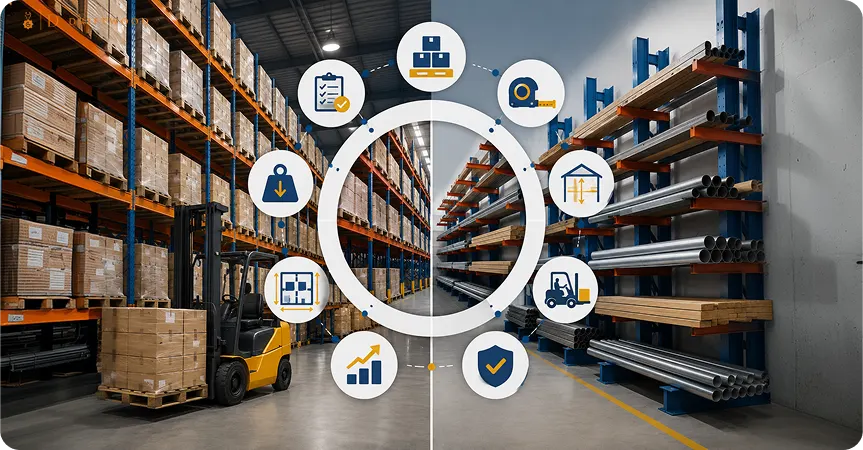
Considering these factors alongside the difference between pallet racks and cantilever racks helps businesses choose a storage solution that supports long-term operational efficiency.
Each system is designed to improve storage efficiency for specific inventory types.
Boltless shelving systems are valued for their flexibility and ease of use.
Selecting between Pallet Racks or Cantilever Racks should be based on your specific business requirements rather than popularity or price. Choosing the right storage solution starts with understanding the differences between pallet racking and cantilever racking, ensuring you invest in a system that best suits your inventory and operational needs. By carefully evaluating your storage requirements, businesses can maximize warehouse efficiency, optimize available space, and reduce long-term operational costs.