The debate of Pallet Racking vs Cantilever Racking is common among industries because both systems are designed for different storage purposes. While pallet racking is ideal for standard palletized goods, cantilever racking is perfect for long and oversized materials.
Understanding the differences between pallet racks vs cantilever racks allows businesses to invest in a storage system that supports long-term growth and warehouse optimization.
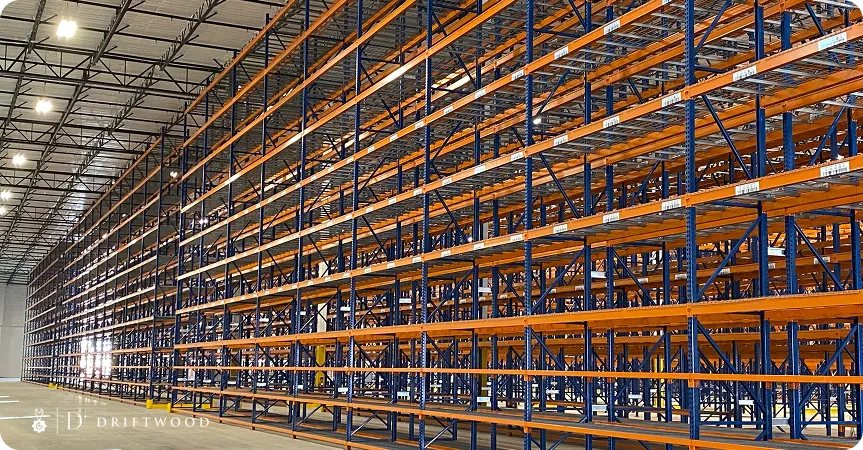
Pallet racking is a highly popular warehouse storage solution used by businesses to organize and store palletized goods efficiently. It consists of vertical frames and horizontal beams designed to store palletized products in multiple levels. This system allows forklifts to easily load and unload inventory while maximizing warehouse space.
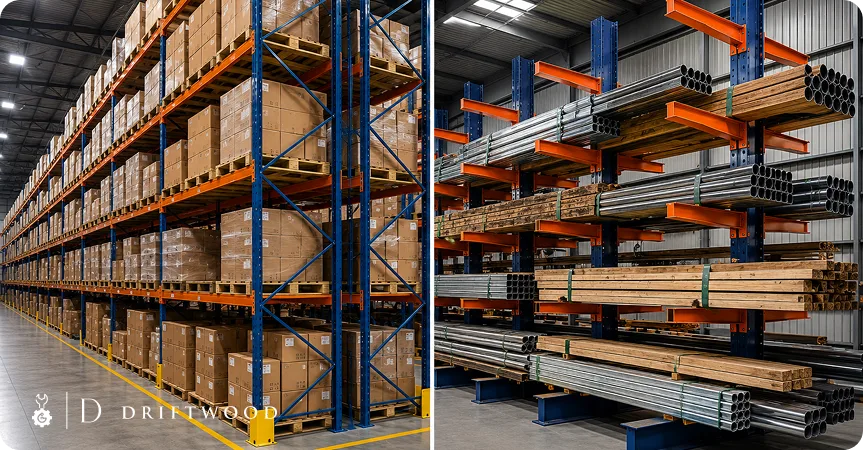
In the comparison of Pallet Racking vs Cantilever Racking, pallet racks are best suited for storing products with uniform sizes and shapes. They are highly effective for warehouses handling boxed goods, packaged items, and bulk inventory.
Pallet racking systems help warehouses utilize vertical space efficiently, increasing storage capacity without expanding floor area. This improves warehouse organization and reduces storage costs. In the comparison of Pallet Racking vs Cantilever Racking, pallet racking is ideal for businesses that need high-density storage solutions.
Products stored on pallets are easier to organize, identify, and access. Clearly arranged storage locations improve inventory tracking, reduce picking errors, and support smoother warehouse operations.
Pallet racking is one of the most affordable and practical storage systems for warehouses. Its durability, availability, and flexible configurations make it suitable for both small businesses and large distribution centers.
The organized structure of pallet racking allows forklifts to load and unload products quickly. This improves workflow efficiency, reduces handling time, and helps businesses manage inventory more effectively.
Pallet racking systems are available in different configurations such as selective racks, drive-in racks, and push-back racks. This flexibility allows businesses to customize storage according to product type, warehouse space, and operational needs.
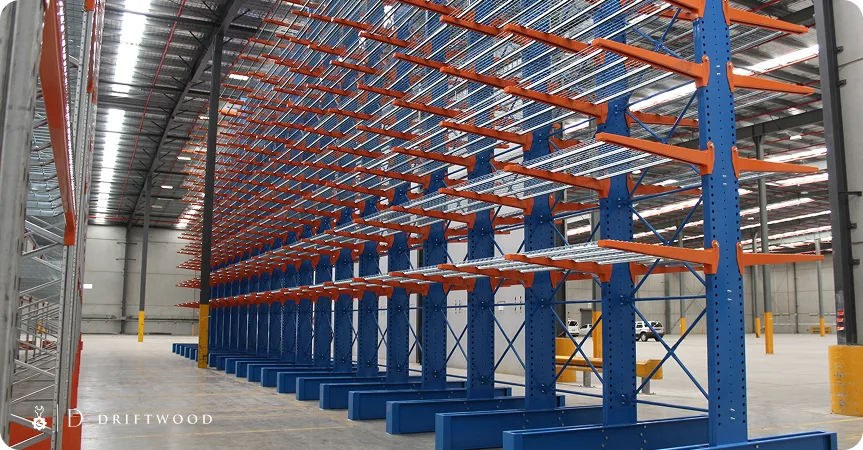
Cantilever racking is a specialized storage system designed for long, heavy, or irregularly shaped materials. Unlike pallet racks, cantilever systems use horizontal arms extending from vertical columns without front obstructions. This open design allows easy storage of oversized products.
In the discussion of Pallet Racking vs Cantilever Racking, cantilever racks provide better accessibility and flexibility for storing lengthy materials.
Cantilever racking systems are designed to store long, oversized, and irregularly shaped materials such as timber, steel pipes, furniture, and construction products. In the comparison of pallet racks vs cantilever racks, cantilever systems are the ideal choice for businesses handling lengthy inventory that requires open and flexible storage.
The open-front design of cantilever racks allows forklifts and material handling equipment to load and unload products quickly and safely. With no front columns blocking access, warehouse operations become faster and more efficient.
Cantilever racks feature adjustable arms and customizable configurations, making them suitable for storing products of different sizes, weights, and lengths. This flexibility helps businesses adapt storage space based on inventory needs.
The open structure of cantilever racking keeps products clearly visible and easy to access. This improves inventory management, reduces search time, and supports smoother warehouse operations.
Cantilever racking provides secure storage for long and heavy materials, reducing handling difficulties and minimizing the risk of scratches, bending, or breakage. This helps protect inventory while improving workplace safety and efficiency.
Pallet racking offers higher storage density for standard goods, while cantilever racking focuses on accessibility for oversized products.
Pallet racks require pallets for storage, whereas cantilever racks support direct storage of long materials.
Pallet racking works well in compact warehouse environments, while cantilever systems require more horizontal space.
Cantilever racks provide greater flexibility for storing irregular products of varying lengths.
Pallet racking is common in retail and logistics, while cantilever racking is preferred in construction and manufacturing industries.
The comparison of Pallet Racking vs Cantilever Racking highlights how each system serves different storage purposes.
There is no universal answer when choosing between pallet racks vs cantilever racks because the ideal solution depends on business requirements.
Some businesses even combine both systems to create a more efficient warehouse setup.