When setting up a storage system, it is important to find out which type is essential, whether it is light duty or heavy duty racks. Both perform the same purpose, but they differ in efficiency, space, strength, and functioning. Let’s dive into the common differences between light duty and heavy duty racks.
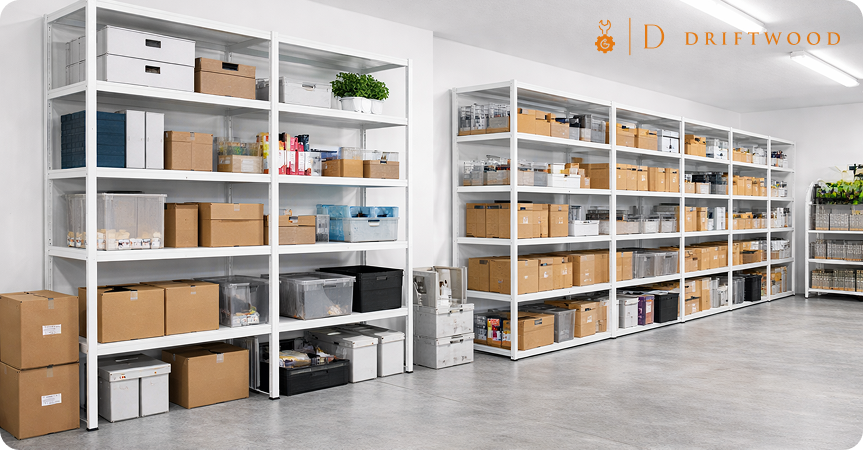
The most common difference between light duty and heavy duty racks is that light duty racks are mainly made for storing less weight items and are ideal for spaces where there is no requirement for heavy storage.
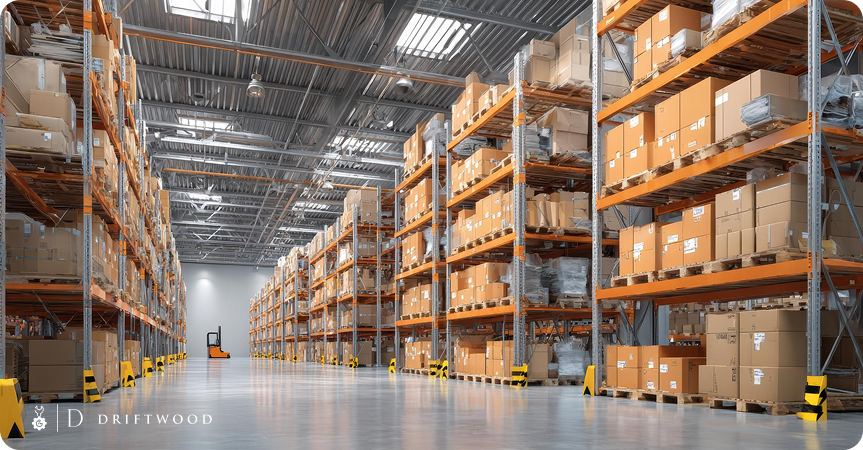
When we talk about heavy duty racks, they are mainly designed to store bulky or heavy-weighted items or products. Examples include heavy machinery and places where heavy equipment is present.
Light duty racks are useful for handling lightweight items and are appropriate for manual use. These are ideal for items that require easy and frequent access. Common uses include offices for storing books and files, warehouses for small equipment, retail shops for products and grocery items, and commercial buildings for small storage rooms or kitchens.
These are the main advantages of light duty racks.
When we talk about the limitations, the major ones include that they are not suitable for heavy items and have lower durability under high stress. So, they are only appropriate for storing smaller items.
Heavy duty racks are especially engineered for large-scale storage systems, mainly used in warehouses and other industries. They are designed to hold high-weight machinery, large products, and high-efficiency items, making safety, efficiency, and strength non-negotiable.
Unlike other shelving and storage systems, heavy duty racks are developed for long-term usage with minimal wear and tear, and they are built to handle high pressure with maximum safety.
These are the main characteristics of heavy duty racks.
When we compare Light duty vs heavy duty racks, heavy duty racks are mainly used in industrial warehouses and centers. They are also used in logistics and supply chain industries and serve as a storage system in automobile industries, as they can carry heavy-weight equipment.
When we compare both Light duty vs heavy duty racks, both are essential for proper organization and workflow in industrial or warehouse systems.
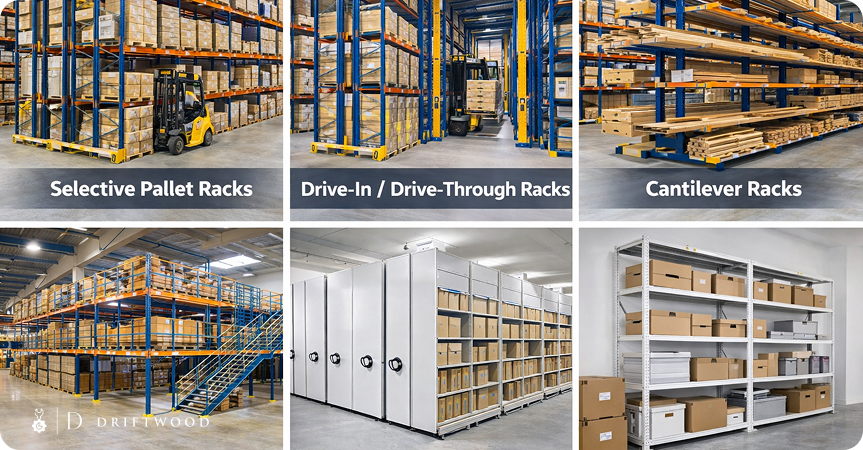
Before choosing Light duty vs heavy duty racks, it is important to understand the types of storage racks separately. Each storage rack is designed for different purposes based on the weight and characteristics of goods and products. Selecting the right type is essential for overall productivity, workflow, efficiency, and accessibility.
Selective pallet racks are the most widely used racking system in warehouses due to their simplicity and easy accessibility. They allow direct access to every pallet, making them highly efficient for storage systems.
Drive-in and drive-through racks help store high-density items and allow forklifts to enter the racking system directly. They are ideal for storing large quantities of similar products.
Cantilever racks are specifically made to store large and bulky items, including irregular-shaped products. They have no front columns, making loading and unloading easier.
Mezzanine racks are useful for creating additional space within existing areas. They act as a multi-level storage system and make effective use of vertical space.
Mobile compactor racks have movable bases and are used in spaces that require sliding storage systems. Their space-saving design is highly beneficial across different sectors.
Slotted angle racks are mainly used in light duty environments. They are lightweight, flexible, and easy to install, making them a common choice for small-scale industries.